
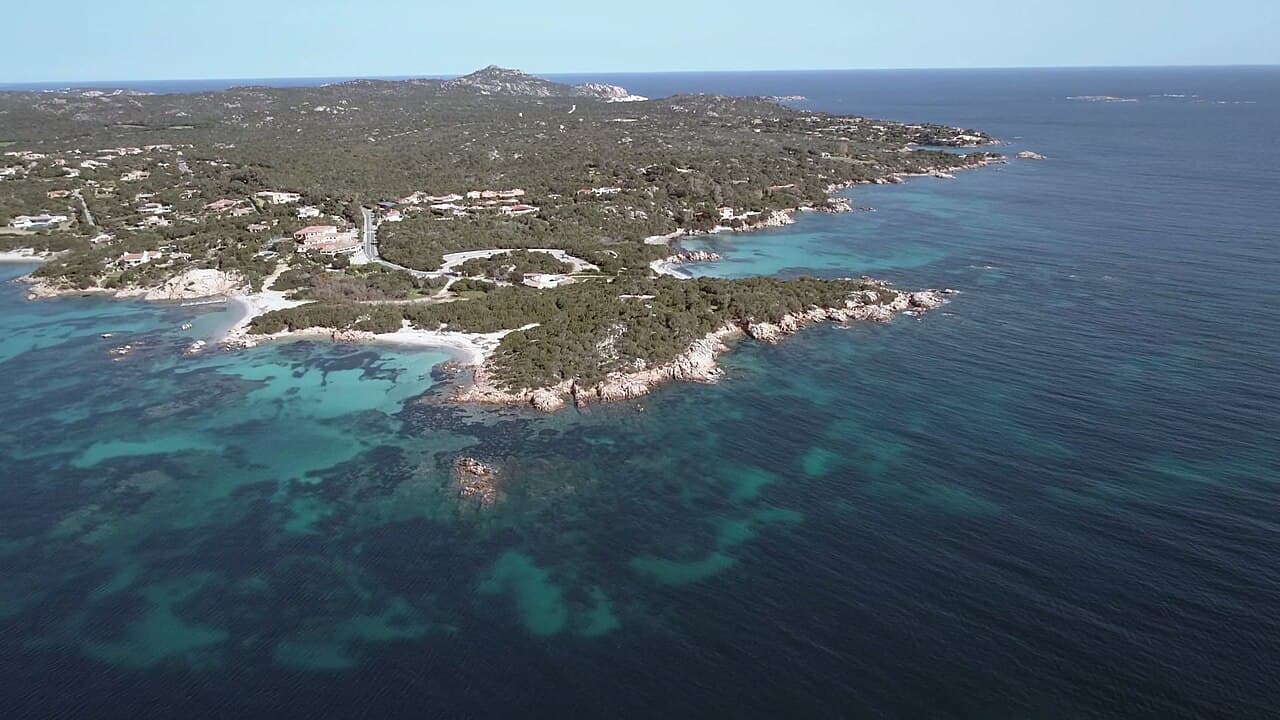
Routes from three to seven days, with real distances and honest driving times: north, south, the west coast, the interior and the full island loop.
Distances in Sardinia are deceptive. There are no motorways, and the coastal roads are narrow and full of bends: sixty kilometres on the Alghero–Bosa corniche take an hour and a half, not forty minutes. The itineraries below are built on real times, not the ones the satnav promises.
North-east in three days, from Olbia. Day one on the Costa Smeralda — Porto Cervo, Baja Sardinia, Spiaggia del Principe — with hops of twenty to forty minutes each. Day two heading north: Palau, the ferry to La Maddalena and Caprera, Santa Teresa Gallura and Capo Testa. Day three heading south: San Teodoro, Cala Brandinchi, La Cinta and the Tavolara headland.
North-west in three days, from Alghero. Day one Capo Caccia, Neptune’s Grotto and the Bombarde and Lazzaretto beaches, ten minutes from town. Day two Stintino and La Pelosa, with Asinara island facing you; it is about 55 kilometres and worth an early start, as beach access is capped in summer. Day three the coast road to Bosa, one of the finest scenic drives in Italy, with a stop in the village and a return through the interior.
South in four days, from Cagliari. Cagliari and Poetto on day one, then Villasimius and Costa Rei to the east (just under an hour), Chia, Tuerredda and the dunes to the west (a little over an hour), and one day inland: Nora, the seaside archaeological site, and if time allows Su Nuraxi at Barumini, a UNESCO site.
Coast to coast in five days, from Olbia to Cagliari. You head down the east coast — Cala Gonone and the Gulf of Orosei, where the best coves are reached by boat, then Ogliastra and Bari Sardo — and finish at Villasimius. It involves the most driving (around 400 kilometres in total) and is the route where flying into one airport and out of the other really pays.
The full island loop in seven days is possible but leaves little time to stop: around 900 kilometres. It only makes sense if the aim is to see a lot rather than to lie on a beach. Either way: fill up whenever you drop below half a tank, because inland petrol stations close early, and bear in mind that some beaches are reached on short but rough gravel tracks.